CNC Machine Retrofitting for Better Performance
Industrial machines are a major investment for any manufacturing company. Over time, an older CNC machine may start showing problems such as reduced accuracy, slower operation, frequent breakdowns, outdated controls, or difficulty finding replacement electronic parts. However, replacing the complete machine is not always necessary.
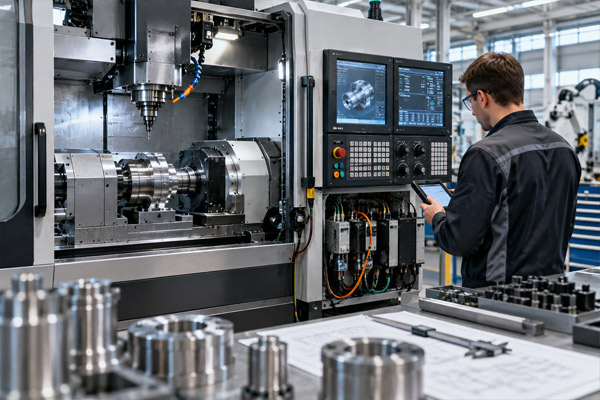
CNC Machine Retrofitting is a practical solution that helps manufacturers upgrade existing machinery with modern control systems, electrical components, drives, motors, sensors, and automation technology. It can extend the working life of the machine while improving accuracy, productivity, and operating convenience.
For manufacturing companies looking to modernize their existing equipment, CNC retrofitting can provide a cost-effective alternative to investing in an entirely new machine.
What Is CNC Machine Retrofitting?
CNC machine retrofitting is the process of upgrading an existing machine by replacing outdated control and automation components with modern technology.
The basic mechanical structure of the machine may still be strong and suitable for production. Instead of replacing the complete machine, important electrical, electronic, and control components can be upgraded.
Depending on the condition and requirement of the machine, retrofitting may include:
- CNC control system
- PLC system
- Servo motors
- Servo drives
- Spindle drives
- Electrical control panel
- Operator control panel
- Encoders and sensors
- Wiring and electrical components
- Lubrication controls
- Safety systems
- Machine software and programming
The exact retrofit solution depends on the machine type, current condition, production requirement, and desired level of automation.
Why Do Industries Need CNC Machine Retrofitting?
Many industrial machines are mechanically strong enough to work for several more years, but their control technology becomes outdated.
Older CNC systems may cause problems such as:
- Frequent electronic failures
- Poor positioning accuracy
- Slow machining cycles
- Difficulty finding spare parts
- Higher maintenance requirements
- Complicated programming
- Limited automation options
- Production downtime
CNC retrofitting helps solve these problems by combining the existing mechanical structure with improved control technology.
It can be especially useful for companies that have reliable machines but want better performance from their existing equipment.
Major Benefits of CNC Machine Retrofitting
Improved Machine Accuracy
Modern servo systems, drives, encoders, and CNC controllers can provide improved positioning and repeatability.
Better control over machine movements helps manufacturers maintain consistent machining quality across multiple components.
Increased Production Efficiency
An upgraded CNC system can improve machine response and reduce unnecessary operator involvement.
Better automation can help reduce cycle time and allow manufacturers to complete more components during each production shift.
Lower Investment Compared to New Machinery
Buying a completely new CNC machine can require a large capital investment.
If the existing machine structure is in good condition, retrofitting selected systems can be a more economical way to modernize manufacturing operations.
Easier Machine Operation
Modern CNC controllers generally provide user-friendly interfaces and easier programming options.
Operators can enter machining parameters, monitor operations, diagnose alarms, and make adjustments more efficiently.
Reduced Machine Downtime
Older electronic components may become difficult to repair or replace.
Updating outdated systems with currently supported components can simplify future maintenance and help reduce unexpected production interruptions.
Extended Machine Working Life
A machine with a strong bed, structure, spindle assembly, and mechanical system may continue operating for years after its control system becomes outdated.
Retrofitting allows manufacturers to continue using this mechanical investment with modern automation technology.
CNC Lathe Machine Retrofitting
CNC lathe machines are widely used for turning, facing, threading, boring, and other machining operations.
Older CNC lathes can be upgraded through CNC Lathe Machine Retrofitting to improve control over spindle movement, axis positioning, feed rate, and machining operations.
A typical lathe retrofit may include upgrading:
- CNC controller
- X and Z axis servo system
- Servo motors and drives
- Spindle drive
- PLC controls
- Electrical panel
- Operator interface
- Limit switches and sensors
- Feedback systems
A properly planned retrofit can help an older lathe meet modern production requirements without replacing the complete machine.
When Should You Consider CNC Retrofitting?
Manufacturers should consider CNC Machine Retrofitting when their existing equipment experiences regular control-system problems but still has a strong mechanical structure.
Retrofitting may be suitable when:
- CNC controls have become outdated
- Electronic spare parts are unavailable
- Maintenance costs are increasing
- Positioning accuracy has decreased
- Production speed needs improvement
- The machine requires automation
- Operators face programming difficulties
- The existing mechanical structure remains reliable
A complete technical inspection should be carried out before deciding whether retrofitting or full machine replacement is the better option.
Industries That Can Benefit From CNC Retrofitting
CNC machine retrofitting can support many manufacturing sectors, including:
- Automobile industries
- Valve manufacturing
- Pump manufacturing
- Gear manufacturing
- Flange manufacturing
- Hydraulic equipment manufacturing
- General engineering
- Heavy machinery manufacturing
- Precision component manufacturing
- Industrial fabrication
Machines used for continuous production can particularly benefit when retrofitting improves reliability and reduces downtime.
CNC Machine Retrofitting in Ahmedabad
Ahmedabad and Gujarat have a strong manufacturing base covering engineering, automotive components, pumps, valves, machinery, hydraulics, and industrial equipment.
Manufacturing companies operating older CNC machines can use retrofitting to modernize their equipment while continuing to use existing mechanical infrastructure.
Choosing an experienced CNC Machine Retrofitting Company in Ahmedabad is important because every machine requires a different combination of mechanical understanding, electrical engineering, control programming, installation, and testing.
CNC Machine Retrofitting Process
1. Machine Inspection
The mechanical condition, electrical system, controls, motors, drives, spindle, and machine movements are checked.
2. Retrofit Planning
Suitable CNC controls, servo systems, drives, electrical components, and required modifications are selected.
3. Removal of Old Components
Outdated electrical and control components are carefully removed.
4. Installation of New Systems
New controllers, drives, motors, panels, wiring, sensors, and related components are installed according to the machine requirements.
5. Programming and Configuration
CNC and PLC parameters are configured based on the machine functions and production application.
6. Testing and Calibration
Axis movements, spindle operation, positioning, safety functions, alarms, and machining accuracy are tested before regular production begins.
Choose Laxmi Technocrat for CNC Machine Retrofitting
Laxmi Technocrat provides industrial machinery and CNC-related solutions for manufacturing applications.
Businesses looking for CNC Machine Retrofitting in Ahmedabad can discuss their existing machine condition, production requirements, automation needs, and required upgrades before selecting a suitable retrofit solution.
A properly planned retrofit can help improve machine usability, accuracy, reliability, and productivity while extending the useful life of existing equipment.
Conclusion
CNC Machine Retrofitting is an effective way to modernize older industrial machinery without automatically replacing the complete machine.
By upgrading CNC controls, servo motors, drives, PLC systems, electrical panels, sensors, and other automation components, manufacturers can improve machine operation and support modern production requirements.
If your existing CNC machine is mechanically strong but its control technology has become outdated, retrofitting may provide a practical path toward better productivity and machine performance.
Contact Laxmi Technocrat to discuss your CNC machine retrofitting requirements and find a suitable solution for your manufacturing application.
Frequently Asked Questions
CNC Machine Retrofitting means upgrading an existing CNC machine with newer controls, drives, motors, electrical systems, sensors, and automation technology.
It can be more economical when the existing machine has a strong mechanical structure and only its control or electrical systems require modernization.
CNC lathes, turning machines, drilling machines, milling machines, and several other industrial machine tools may be suitable for retrofitting depending on their condition.
Components may include CNC controllers, PLCs, servo motors, servo drives, spindle drives, electrical panels, sensors, encoders, wiring, and operator interfaces.
Yes. Upgraded feedback systems, servo controls, drives, and proper calibration can improve positioning and repeatability when the mechanical condition of the machine is suitable.
Yes. Older CNC lathes with mechanically sound structures can often be upgraded with modern controllers, servo systems, spindle drives, electrical panels, and automation components.
Laxmi Technocrat provides industrial machinery solutions from Ahmedabad, Gujarat. Manufacturers can discuss their existing machine and production requirements to determine a suitable CNC retrofit solution.